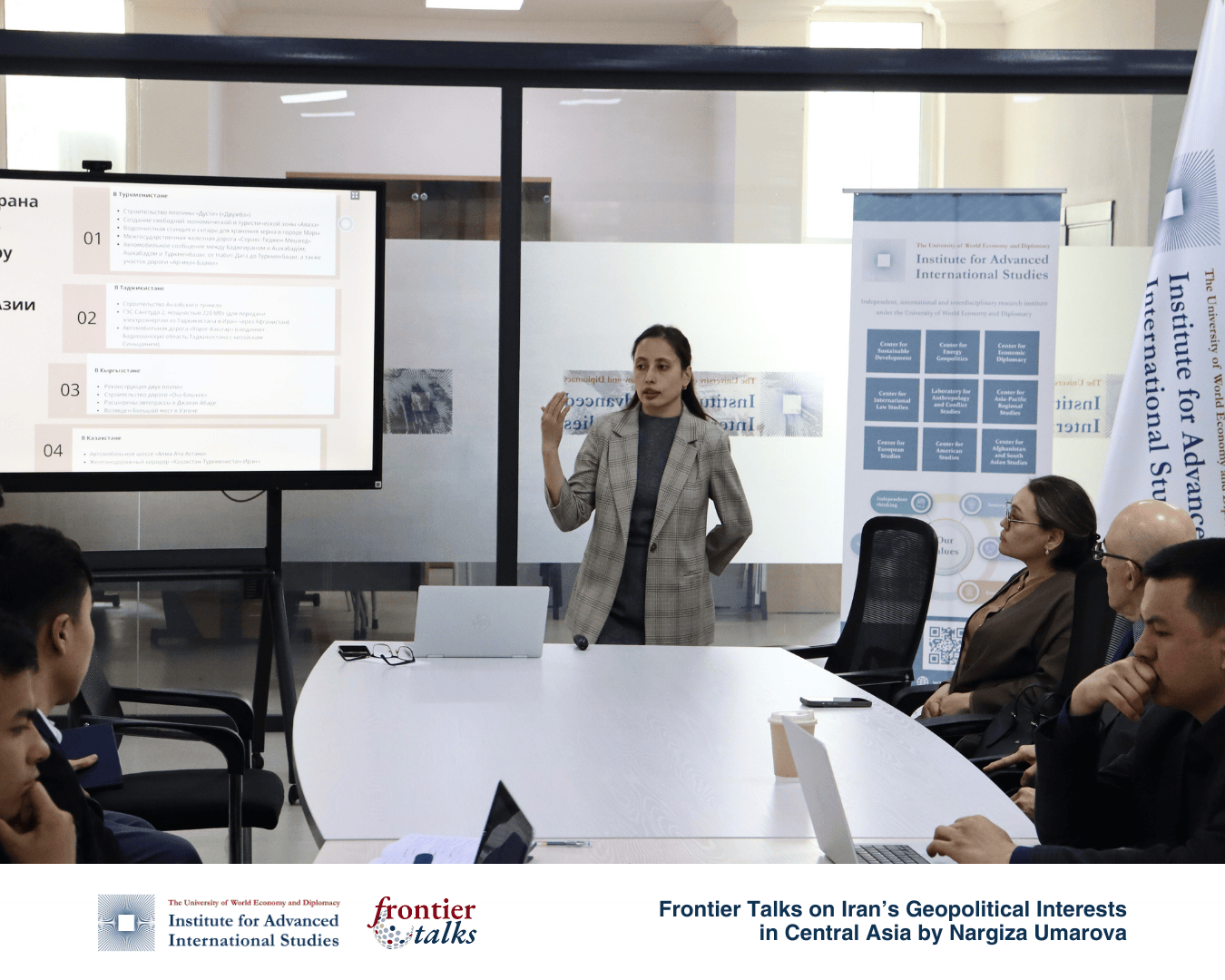
On 24 February, IAIS convened a new session of its flagship expert platform, Frontier Talks, entitled “Iran’s Geopolitical Interests in Central Asia”. The seminar brought together scholars, researchers, and students of international relations for an in-depth discussion of Iran’s evolving strategic posture in the region.
The session featured Nargiza Umarova, Head of the Center for Strategic Connectivity, whose research focuses on regional geopolitics, transport corridors, and integration dynamics across Eurasia. Drawing on extensive analytical expertise, Ms. Umarova presented a comprehensive assessment of the Islamic Republic of Iran’s strategic objectives in Central Asia within the broader framework of contemporary Eurasian international relations.
In her presentation, Ms. Umarova addressed long-standing debates surrounding the nature of Tehran’s policy towards the five Central Asian republics. She examined whether ideological expansionism constituted the primary objective of Iran’s early engagement with the region following the dissolution of the Soviet Union and whether Central Asia was initially regarded as a foreign policy priority.
At the same time, the speaker highlighted internal and external constraints that influenced Iran’s regional engagement. Among these were apprehensions within Central Asian political elites regarding religious influence, as well as sustained external pressure, particularly from the United States, which limited the scope of economic and infrastructural cooperation.
The session concluded with a vibrant interactive discussion among participants, who raised questions concerning the future of regional economic connectivity, the impact of geopolitical competition, and Iran’s potential role in shaping the evolving architecture of Central Asia’s external relations.
The Frontier Talks seminar once again demonstrated IAIS’s role as a platform for rigorous scholarly debate and policy-oriented dialogue on pressing international issues. Future sessions within the Frontier Talks series will continue to engage leading experts in examining critical geopolitical trends affecting Central Asia and the wider Eurasian space