Reports

outputs_in

Reports

29 January, 2026

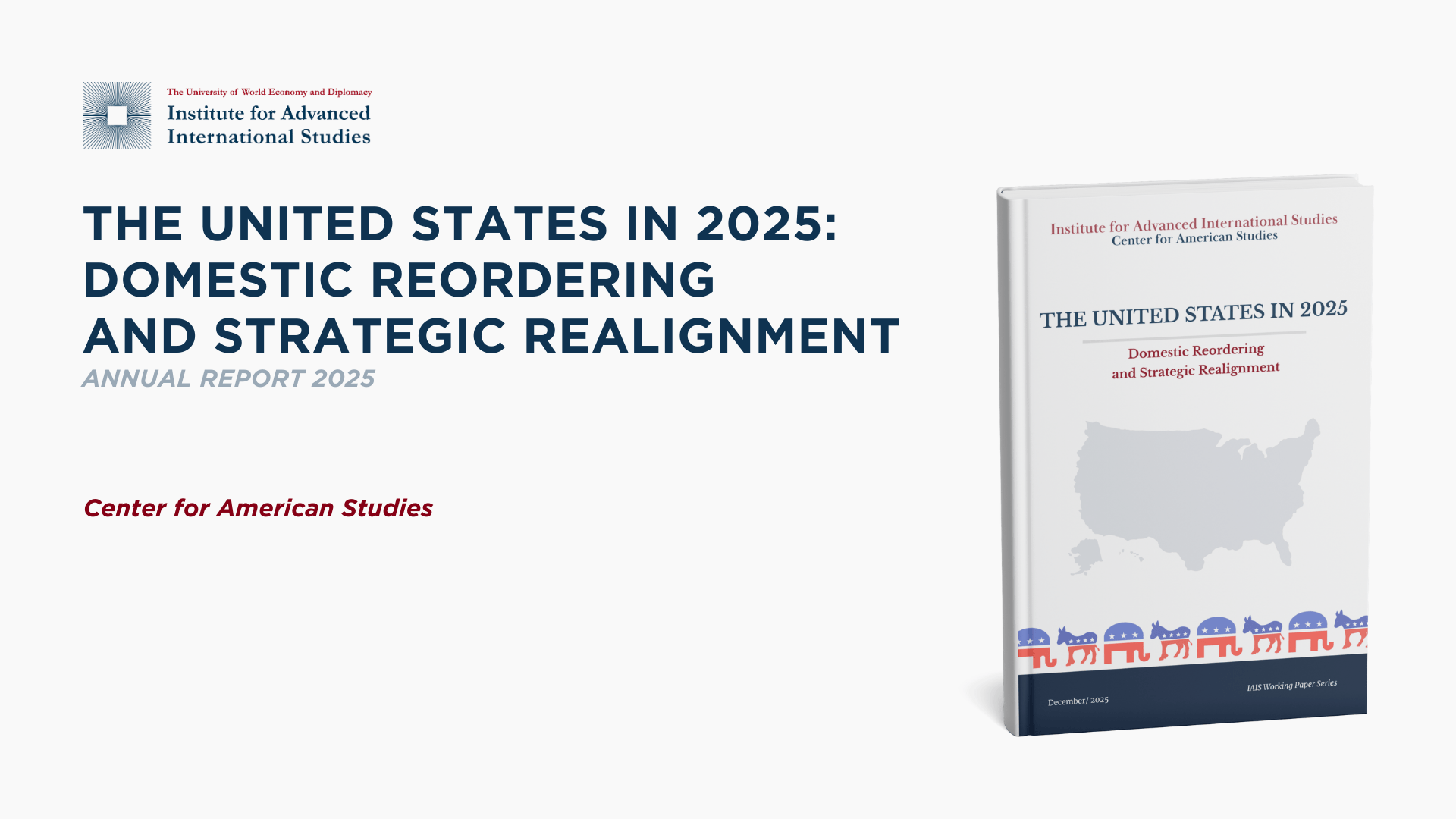
The United States in 2025: Domestic Reordering and Strategic Realignment

This flagship annual report by the Center for American Studies compiles a comprehensive set of materials that map the pivotal events and structural shifts shaping the United States in 2025, treating domestic governance changes and foreign-policy recalibration as two sides of the same strategic agenda. It situates these transformations in the context of the inauguration of the 47th President and the intensified implementation of the “America First” doctrine, which, taken together, recast both the internal trajectory of the US state and Washington’s engagement with the international system. A substantial portion of the report is devoted to domestic re-engineering: institutional reorganisation, the politicisation of bureaucratic governance, and the consolidation of a more protectionist fiscal-economic model. The briefs give particular attention to the “One Big Beautiful Act” and the broader move towards “zero migration”, including the scale of deportations and departures, the expansion of detention and border militarisation, and the tightening of fiscal barriers across humanitarian and labour-migration channels. On the strategic and external front, the report traces a clear shift from liberal internationalism towards transactional realism and economic coercion, analysing how this approach is operationalised across key theatres – US–China institutional confrontation (including AI governance), the reconfiguration of Middle East security dynamics, and the growing strategic salience of Central Asia. It also highlights the deepening fusion between the Pentagon and the technology sector (including new institutional mechanisms) and examines the political legitimisation of digital assets and stablecoins as part of a broader effort to secure US technological and financial primacy. * The Institute for Advanced International Studies (IAIS) does not take institutional positions on any issues; the views represented herein are those of the author(s) and do not necessarily reflect the views of the IAIS.

outputs_in

Reports

22 January, 2026

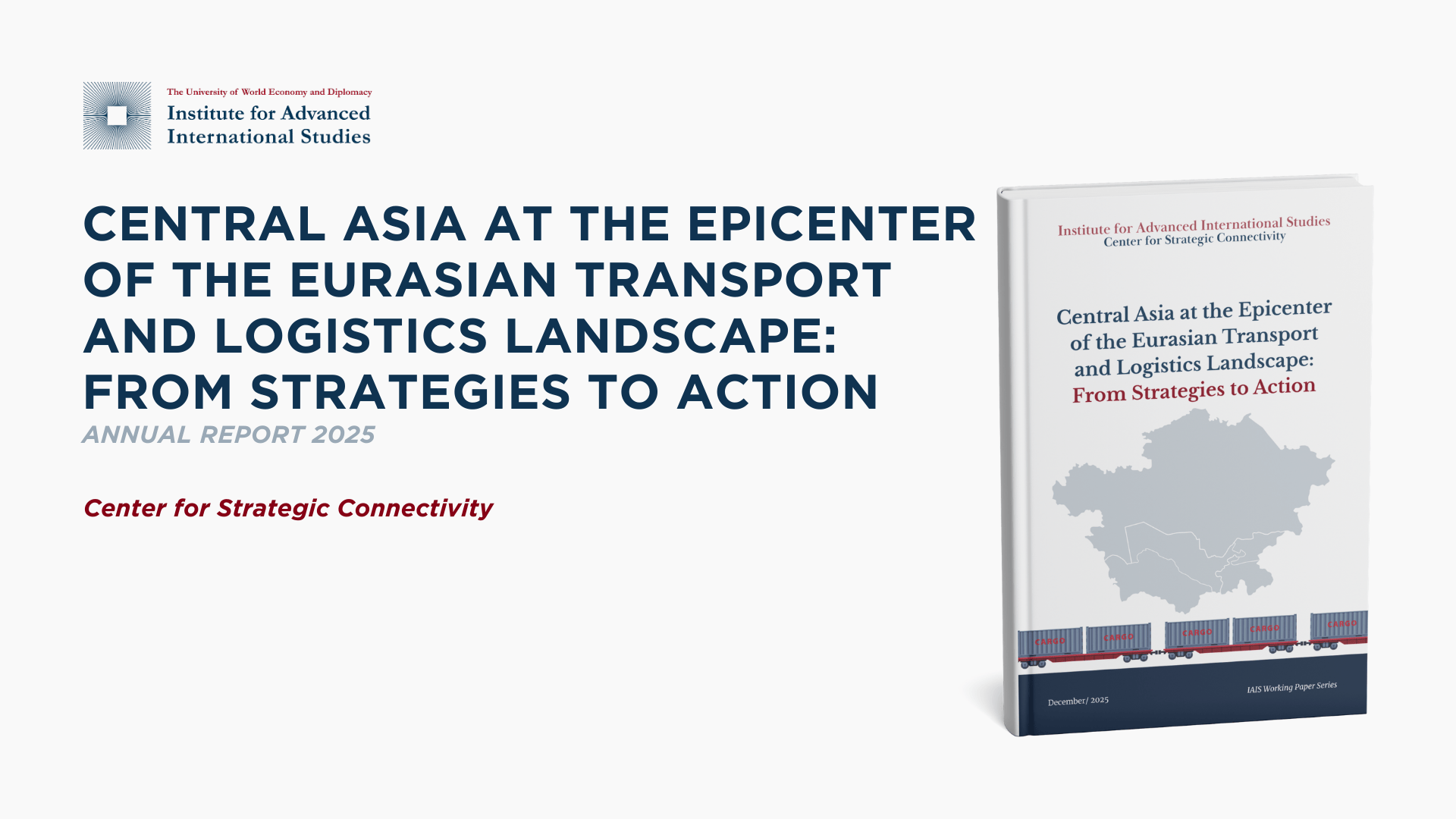
Central Asia at the Epicenter of the Eurasian Transport and Logistics Landscape: From Strategies to Action

An annual analytical report of the Center for Strategic Connectivity at the Institute for Advanced International Studies (IAIS) provides a comprehensive, policy-oriented assessment of Central Asia’s evolving role as a key transit and connectivity hub linking East and West, North and South. Drawing on analytical articles, research papers, and policy briefs produced by the Center throughout 2025, the report examines the transformation of Central Asia into a more unified transport space, the development of major international corridors, and the region’s growing importance amid global supply chain reconfiguration. It pays particular attention to strategic projects such as the China–Kyrgyzstan–Uzbekistan railway, the Trans-Caspian (Middle Corridor) route, Trans-Afghan transport corridors, and expanding connectivity toward Iran, the South Caucasus, Turkiye, and global markets. The report combines geopolitical analysis with economic and infrastructural perspectives, highlighting both cooperation and competition among Central Asian states, existing bottlenecks in transport integration, and the need for greater coordination in tariffs, digitalization, and regulatory frameworks. Moving beyond strategic visions, it focuses on practical implementation pathways, offering insights relevant to policymakers, transport planners, investors, diplomats, and researchers engaged in Eurasian connectivity and regional integration processes. * The Institute for Advanced International Studies (IAIS) does not take institutional positions on any issues; the views represented herein are those of the author(s) and do not necessarily reflect the views of the IAIS.

outputs_in

Reports

21 January, 2026

Managing Global Competition Through Economic Diplomacy

This annual analytical report of the Center for Economic Diplomacy at the Institute for Advanced International Studies (IAIS) provides a comprehensive assessment of Uzbekistan’s external economic environment and internal transformation agenda amid accelerating global fragmentation, geopolitical uncertainty, and technological change. Structured around four interlinked pillars – regional and bilateral trade cooperation, global economic governance and financial architecture, digital and innovation-driven cooperation, and long-term socio-economic transformation, the report analyses Uzbekistan’s positioning within key economic spaces, including ECO, China–Central Asia relations, BRICS frameworks, the Organization of Turkic States, and cooperation with the European Union. Particular attention is devoted to export diversification, WTO accession, alternative financial mechanisms, digitalization, and poverty reduction strategies. Combining quantitative data with institutional and policy analysis, the report is designed for policymakers, economic planners, diplomats, and researchers seeking a strategic understanding of how Uzbekistan can enhance resilience, preserve economic sovereignty, and secure sustainable growth through diversified integration into regional and global markets. * The Institute for Advanced International Studies (IAIS) does not take institutional positions on any issues; the views represented herein are those of the author(s) and do not necessarily reflect the views of the IAIS.